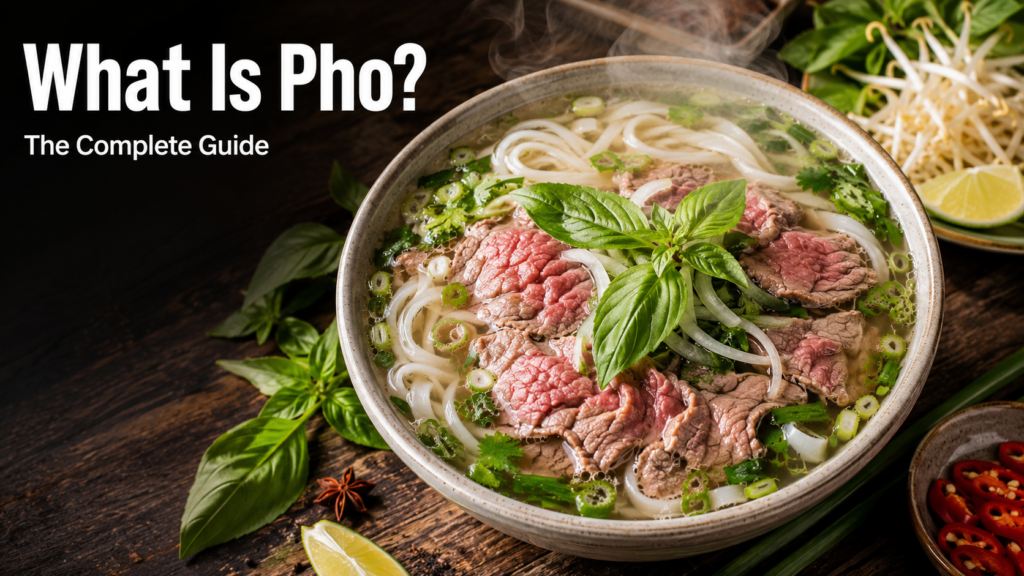
Pho (pronounced “fuh”) is a Vietnamese noodle soup made from a slow-simmered bone broth, flat rice noodles, fresh herbs, and thinly sliced meat — usually beef (phở bò) or chicken (phở gà). It originated in early-20th-century northern Vietnam and is served with garnishes like Thai basil, lime, and bean sprouts.
Pho at a glance
- Origin: Northern Vietnam (Hanoi & Nam Định region), early 1900s
- Pronunciation: “fuh” (rhymes with “duh”) — not “foe”
- Main types: Phở bò (beef) and phở gà (chicken)
- Core parts: Aromatic broth, flat rice noodles (bánh phở), meat, herbs
- Eaten: Any time of day — breakfast, lunch, or dinner
- Calories: Roughly 350–500 per bowl, depending on meat and portion
What is pho, exactly?
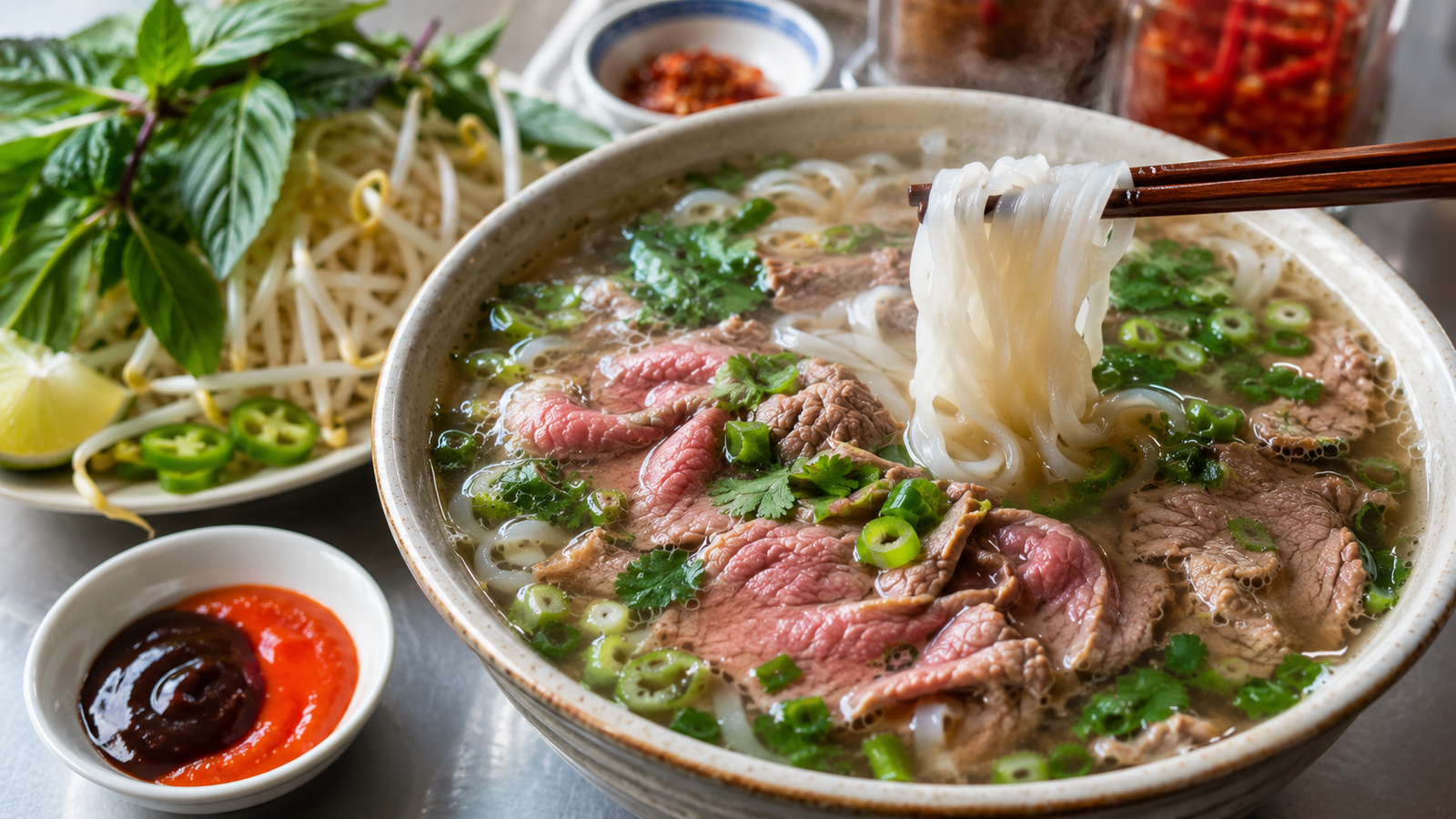
Pho is Vietnam’s most famous dish — a fragrant noodle soup built on a broth that simmers for hours until it’s deep, clear, and layered with spice. Into a bowl go silky flat rice noodles, slices of beef or chicken, and a tangle of fresh herbs. The result is light yet deeply savory, equally at home as a quick breakfast in Hanoi or a comforting dinner in California.
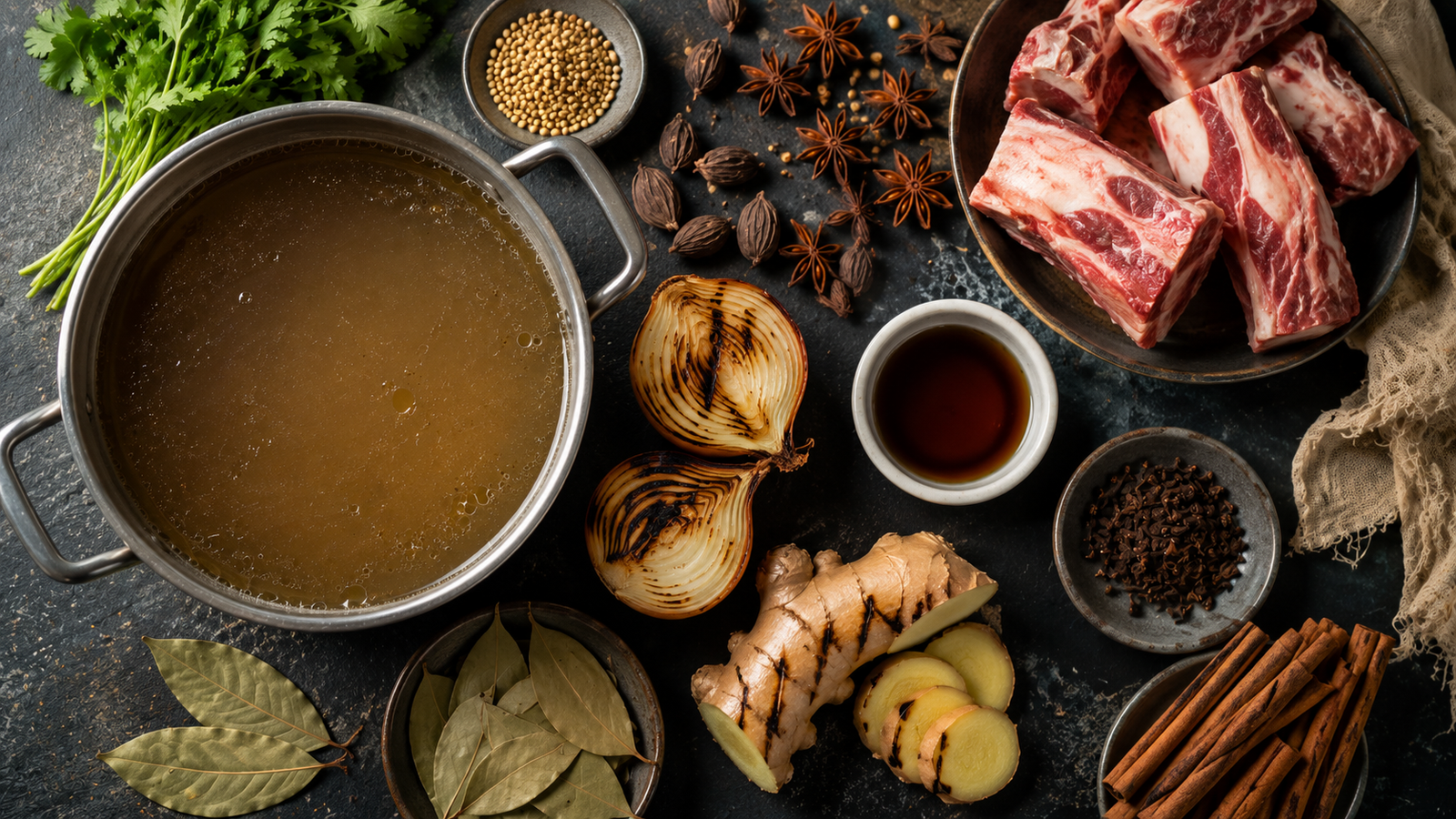
What sets pho apart from other noodle soups is the broth. It’s coaxed from beef or chicken bones along with charred onion and ginger, then seasoned with warm spices — star anise, cinnamon, cloves, coriander, and cardamom — and balanced with fish sauce. Nothing in the bowl is loud on its own; the magic is in the balance.
How do you pronounce “pho”?
Pho is pronounced “fuh” — a short sound that rhymes with “duh,” not “foe” or “foo.” The Vietnamese spelling is phở, and the tone rises slightly at the end. If you’ve been saying “foe” all this time, you’re in good company, but now you can order like a local. For a deeper breakdown, see our guide to pronouncing pho.
What does pho taste like?
A good bowl of pho tastes clean, savory, and aromatic. The broth is the star: rich and beefy (or delicate and chicken-y) with a background hum of cinnamon and star anise. The noodles are soft and neutral, the meat tender, and the fresh herbs, lime, and chili you add at the table bring brightness and heat. It’s a build-your-own experience — every bite can taste a little different.
What’s in a bowl of pho?
Every bowl is assembled from four building blocks:
- The broth: Beef or chicken bones simmered with charred onion, ginger, and whole spices, then seasoned with fish sauce and a little sugar and salt.
- The noodles (bánh phở): Flat rice noodles, soft and slightly chewy, cooked fresh and added to the bowl.
- The meat: Thinly sliced beef or shredded chicken — sometimes meatballs, tendon, or tripe.
- The garnishes: Served on the side so you can customize — Thai basil, bean sprouts, lime wedges, sliced chili, and sauces like hoisin and sriracha.
Common beef cuts in pho
| Vietnamese name | What it is |
|---|---|
| Tái | Rare steak, cooked by the hot broth at the table |
| Chín | Well-done, tender brisket |
| Nạm | Flank |
| Gầu | Fatty brisket |
| Gân | Beef tendon |
| Bò viên | Beef meatballs |
Types of pho
Pho comes in two main varieties and two regional styles. The clearest split is by protein, while the bigger flavor difference comes from where the bowl is made.
Phở bò vs phở gà
| Phở bò (beef) | Phở gà (chicken) | |
|---|---|---|
| Broth base | Beef bones | Chicken bones |
| Flavor | Rich, deeply savory | Lighter, delicate |
| Spices | Star anise, cinnamon, cloves | Subtler spicing, sometimes ginger-forward |
| Best for | The classic, hearty bowl | A lighter option |
Want the full breakdown of cuts and variations? See our guide to the types of pho.
Northern vs Southern style
Northern pho (phở Bắc), from its birthplace around Hanoi, keeps things simple: a clear, savory broth with minimal garnish and wide noodles. Southern pho (phở Nam), shaped by Saigon, is a little sweeter, served with a generous pile of fresh herbs, bean sprouts, hoisin, and sriracha. Most pho in the United States follows the southern, garnish-rich style.
A brief history of pho
Pho emerged in northern Vietnam in the early 20th century, blending local rice-noodle traditions with influences introduced during the French colonial era — including a new appetite for beef. Street vendors around Hanoi and Nam Định helped popularize it. After 1975, waves of Vietnamese refugees brought pho to the United States, where it spread from California and Texas to all 50 states. Today it’s one of America’s most beloved Asian comfort foods.
How to eat pho like a local
- Taste the broth first — before adding anything, so you can judge it on its own.
- Add herbs gradually — tear Thai basil and add bean sprouts and chili to taste.
- Squeeze in lime for brightness.
- Use hoisin and sriracha sparingly — or in a side dish for dipping meat, rather than dumping into the broth.
- Use chopsticks and the spoon together — noodles and meat with chopsticks, broth with the spoon.
New to ordering? Our guides on how to eat pho and how to order pho walk you through it.
Is pho healthy?
Pho can be a nutritious, balanced meal: it’s protein-rich, relatively low in fat, and packed with fresh herbs. A typical bowl runs about 350–500 calories, though sodium can be high because of the broth and fish sauce. For the full nutrition breakdown, read is pho healthy?
Pho vs ramen: what’s the difference?
They’re both Asian noodle soups, but they’re entirely different dishes. Pho is Vietnamese, built on a clear, spice-infused broth with rice noodles and fresh herbs added at the table. Ramen is Japanese, with a richer, often cloudy broth, wheat noodles, and toppings cooked into the bowl. See the full comparison in pho vs ramen.
Find the best pho near you 🍜
Explore 1,700+ authentic Vietnamese pho restaurants across all 50 US states.
Find Pho Near Me →Frequently asked questions about pho
What does pho mean?
“Pho” (phở) refers to both the dish and its signature flat rice noodles. The full name of the soup is often written as phở bò (beef pho) or phở gà (chicken pho), naming the protein in the broth.
How do you pronounce pho?
Pho is pronounced “fuh,” rhyming with “duh” — not “foe.” It’s a short, single syllable with a slight rising tone in Vietnamese.
Is pho Vietnamese or Chinese?
Pho is Vietnamese. It originated in northern Vietnam in the early 20th century, with some influence from Chinese rice-noodle dishes and French beef cooking, but it is recognized worldwide as a Vietnamese national dish.
What is pho broth made of?
Pho broth is made by simmering beef or chicken bones with charred onion and ginger and whole spices — star anise, cinnamon, cloves, coriander, and cardamom — then seasoning with fish sauce, salt, and a touch of sugar.
What kind of meat is in pho?
Beef pho can include rare steak (tái), brisket (chín), flank (nạm), tendon (gân), and meatballs (bò viên). Chicken pho (phở gà) uses sliced or shredded chicken.
Is pho healthy?
Yes — pho is generally a balanced, protein-rich meal that’s relatively low in fat and full of fresh herbs, averaging about 350–500 calories per bowl. Watch the sodium if you’re sensitive to salt.
Want to explore more Vietnamese dishes? Start with our Vietnamese food guide or browse all Vietnamese noodle soups.