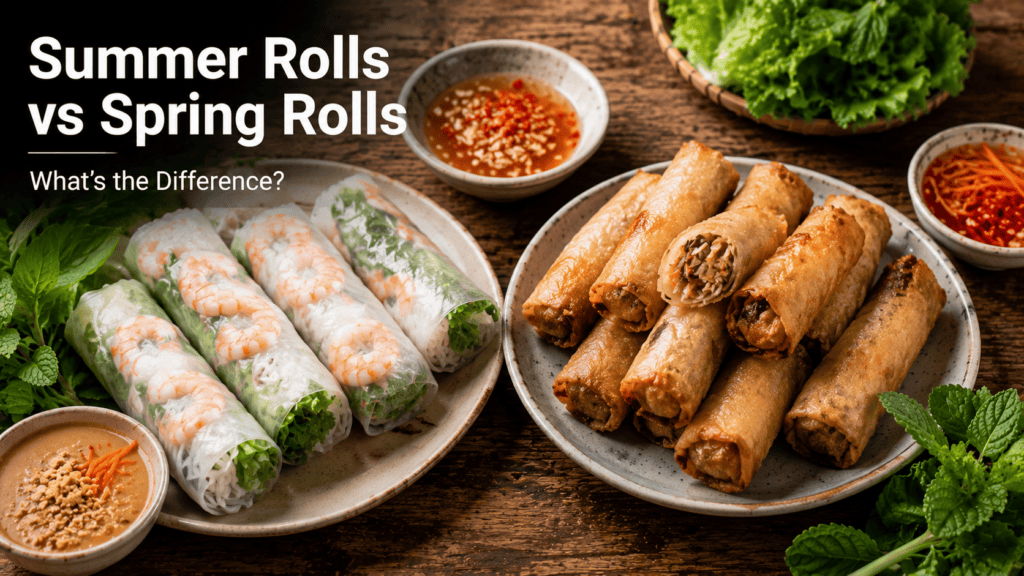
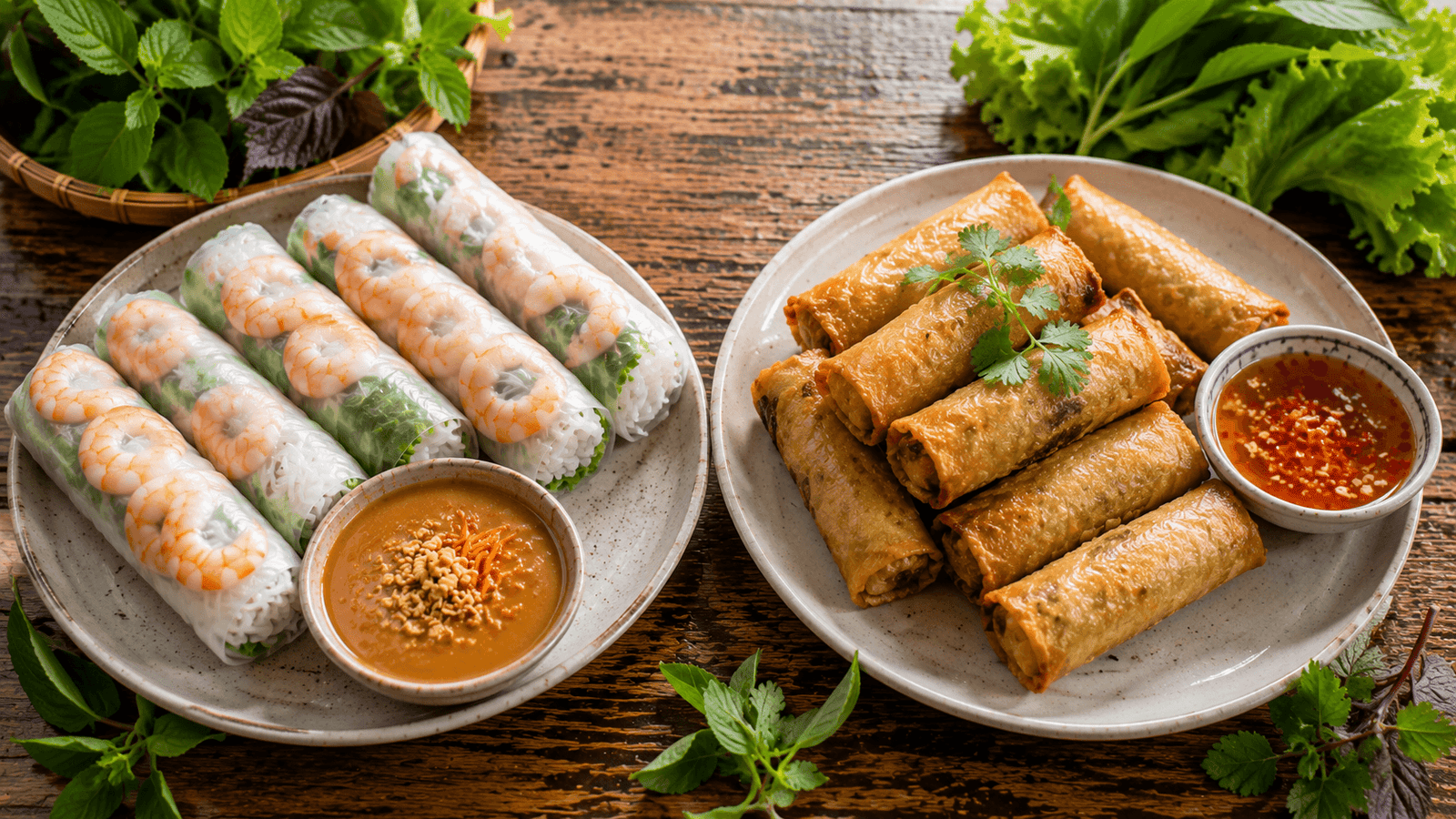
Summer rolls are fresh and served cold in soft, translucent rice paper, while spring rolls are usually fried and crispy. In Vietnamese cuisine, “summer rolls” means gỏi cuốn (fresh rolls with shrimp, pork, vermicelli, and herbs), and “spring rolls” most often refers to chả giò, the deep-fried version.
Key takeaways
- Summer rolls are fresh and cold; spring rolls are usually fried and hot.
- Both use a rice-paper wrapper, but summer rolls keep it soft while spring rolls fry it crisp.
- “Spring roll” is ambiguous — it can mean fresh or fried — while “summer roll” always means fresh.
- Summer rolls are the lighter, lower-calorie choice.
Summer rolls vs spring rolls at a glance
| Summer rolls (gỏi cuốn) | Spring rolls (often fried) | |
|---|---|---|
| Cooking | Fresh, not cooked | Usually deep-fried |
| Temperature | Cold / room temp | Hot |
| Wrapper | Soft rice paper | Rice paper (or thin wheat), fried crisp |
| Texture | Soft, chewy, light | Crunchy |
| Typical filling | Shrimp, pork, vermicelli, herbs | Ground pork, mushroom, glass noodles |
| Dipping sauce | Peanut sauce | Nước chấm |
| Calories (each) | Lower (~80–100) | Higher (frying adds fat) |
Why the names are confusing
Here’s the catch: “spring roll” isn’t a precise term. Depending on the restaurant and region, it can mean a fresh roll or a fried one. “Summer roll,” on the other hand, almost always means the fresh, cold version. So if you specifically want the fresh rolls, ordering “summer rolls” or “gỏi cuốn” is the safest bet.
What are summer rolls (gỏi cuốn)?
Summer rolls are uncooked rolls wrapped in soft rice paper around shrimp, thinly sliced pork, rice vermicelli, lettuce, and fresh herbs. They’re served cold with a creamy peanut dipping sauce — light, fresh, and refreshing.
What are spring rolls (chả giò)?
In a Vietnamese context, the fried “spring rolls” are chả giò: a savory pork-and-vegetable filling rolled in rice paper and deep-fried until golden and crunchy, served with nước chấm. (On US menus they’re sometimes called “Vietnamese egg rolls.”)
Which is healthier?
Summer rolls are the lighter option — they’re fresh, packed with herbs and vegetables, and not fried, so they’re typically lower in calories and fat. Spring rolls are richer because they’re deep-fried.
FAQ
Are summer rolls and spring rolls the same thing?
No. Summer rolls are fresh and served cold, while spring rolls are usually fried and crispy. They share a rice-paper wrapper but differ in cooking and texture.
Why are they called summer rolls?
The name reflects their light, fresh, cooling nature — perfect for warm weather — in contrast to the hot, fried spring rolls.
Are summer rolls fried?
No. Summer rolls (gỏi cuốn) are never fried; they’re served fresh and cold. The fried version is chả giò.
Which has fewer calories, summer rolls or spring rolls?
Summer rolls usually have fewer calories because they aren’t deep-fried, often around 80–100 calories each before sauce.
Learn more in our complete guide to Vietnamese spring rolls, or compare spring rolls vs egg rolls.